
Introduction
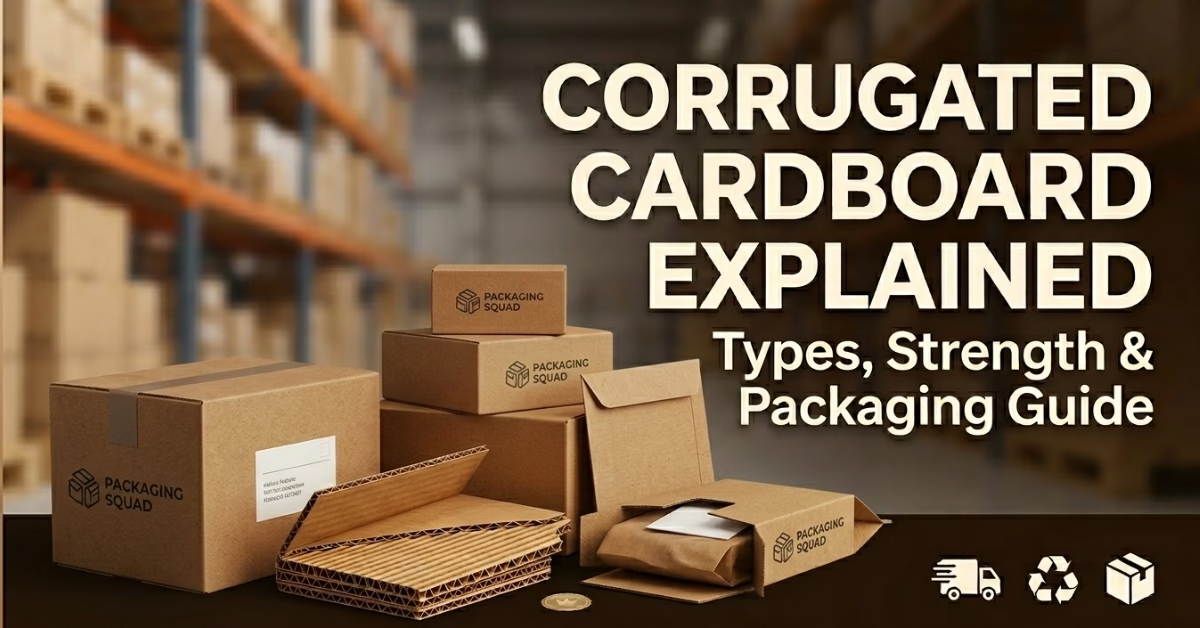
Corrugated cardboard is a strong, lightweight material made from a fluted sheet sandwiched between two flat linerboards. It is widely used to create corrugated boxes for shipping, storage, and retail packaging.
If you sell physical products, packaging is not just a box. It plays a key role in product protection, shipping efficiency, branding, and customer experience. This is why corrugated packaging has become the backbone of modern logistics.
From small eCommerce brands to large manufacturers, businesses rely on corrugated boxes to protect products during transit, reduce shipping costs, and maintain stacking strength in warehouses. However, many still confuse cardboard with corrugated material and overlook how factors like flute type, wall construction, and board strength directly impact performance.
In this complete guide, you will learn:
- What is corrugated cardboard, and how is it made?
- How its fluted structure provides strength and durability
- Different flute types and wall constructions
- How to choose the right corrugated packaging for your product
- Why it remains one of the most cost-effective and sustainable packaging materials
Whether you are launching a new product or improving your shipping process, understanding corrugated cardboard will help you make smarter packaging decisions and improve both logistics efficiency and brand presentation.
1. What Is Corrugated Cardboard?
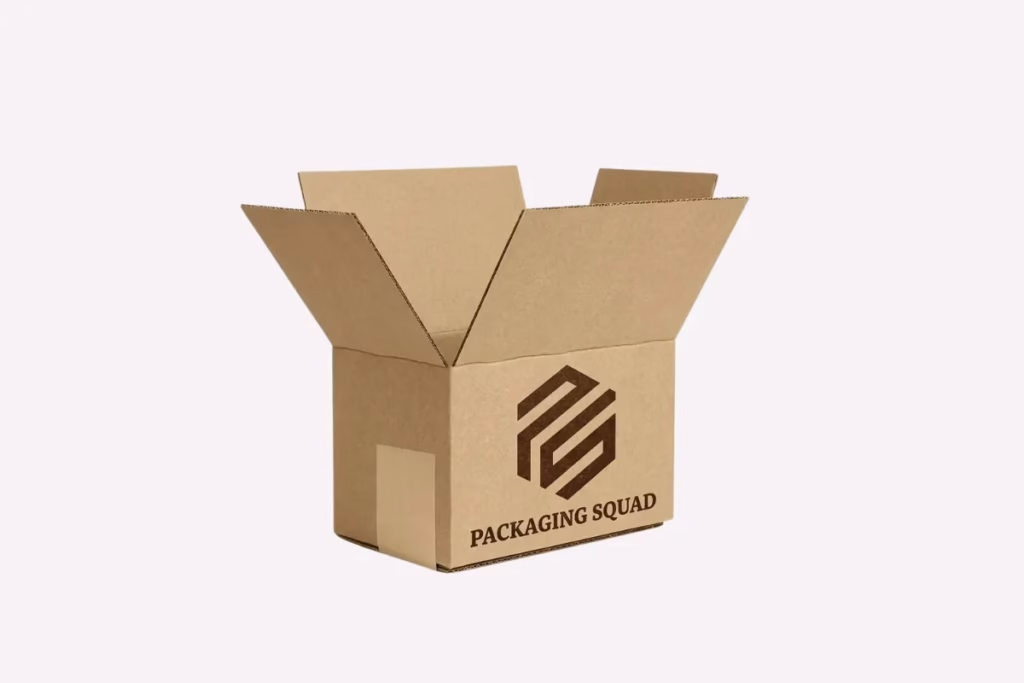
Corrugated cardboard is made for high performance, engineered for strength, durability, and efficient shipping. Unlike regular cardboard, it is designed with three layers that increase load-bearing capacity while remaining lightweight.
At its core, corrugated cardboard differs from standard cardboard because it is made of:
- An outer layer (linerboard)
- An inner liner (linerboard)
- A corrugated medium (fluted corrugated sheet and one)
The fluted layer creates air columns that improve:
- Compression strength
- Shock absorption and cushioning
- Stacking durability
- Overall shipping performance
This makes corrugated cardboard boxes essential for used for shipping boxes, warehouse storage, and eCommerce fulfillment. Cardboard is one of the most misunderstood materials; it is not the same as standard cardboard or paperboard, which lacks fluting and is generally made for retail presentation, like cereal boxes or folding cartons.
2. Structure of Corrugated Cardboard: How It Works
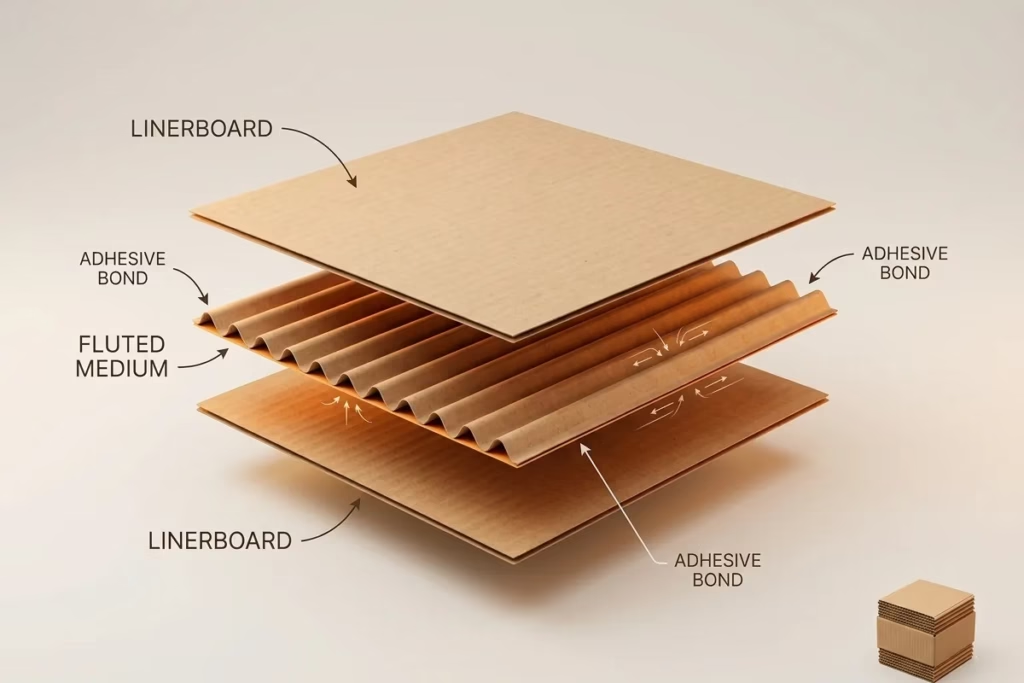
Corrugated packaging is not just layered paper; it is a material made for strength. Its structure relies on two flat sheets of linerboard glued together with the fluted corrugated sheet.
The Three Structural Components
- Linerboard
The liner forms the flat linerboard surfaces. Its role is to:- Provide surface strength, protect against external damage, and serve as the printing surface for branding
- Corrugated Medium (Fluting)
The corrugated medium is the core strength system. The wave-shaped flutes distribute force evenly and act like vertical support beams in construction. This design provides:- Cushioning and shock absorption
- Compression resistance and stacking strength
- Structural rigidity for shipping box performance
- Adhesive Bonding
A starch-based adhesive bonds the two sheets of linerboard with the fluted medium. This ensures:- Structural integrity
- Resistance to separation under stress
- Consistent performance under humidity and temperature
Understanding this structure prevents common mistakes such as using single wall for heavy products or the wrong flute size, which could reduce stacking strength and increase shipping damage.
3. Types of Corrugated Flutes and When to Use Them
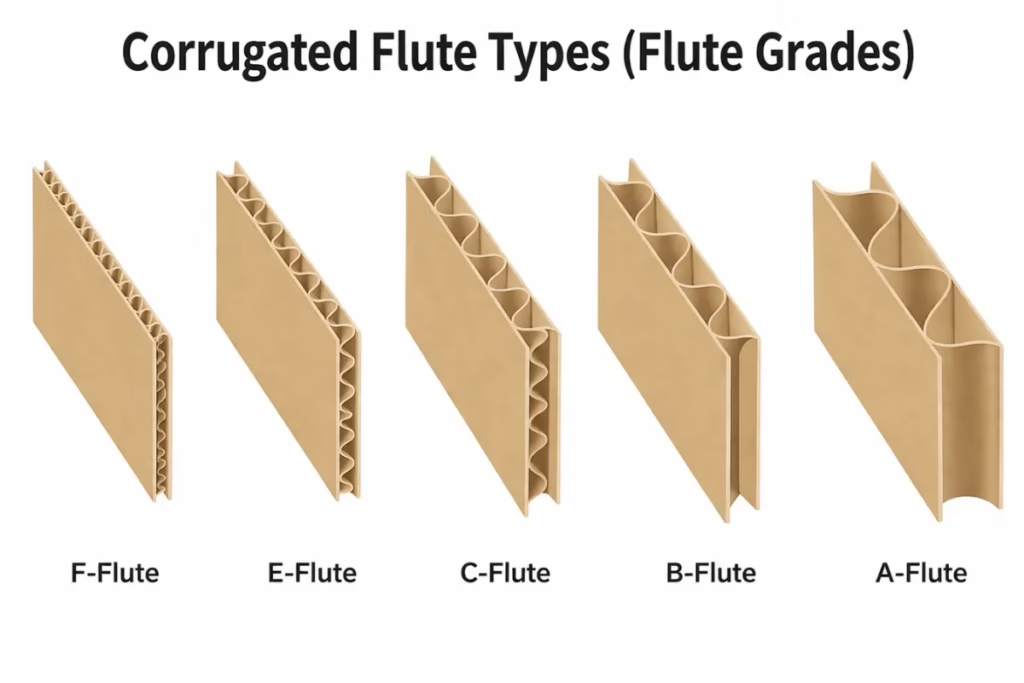
The flute is the wave-shaped inner layer of corrugated cardboard that determines cushioning, stacking strength, and overall protection. Understanding flute types helps businesses select the right corrugated box for shipping, storage, and branding purposes.
A Flute
A flute is one of the thickest options available. It provides excellent cushion and compression strength, making it ideal for fragile items and heavy retail products.
- Best for: Glass products, delicate electronics, and long-distance shipping
- Use: Heavy-duty corrugated cartons
- Notes: Offers strong vertical compression but slightly less smooth surface for printed corrugated branding
B Flute
B flute is moderately thick and balances protection with printability. It is commonly used in retail packaging and die-cut boxes.
- Best for: Food packaging, canned goods, and cardboard packaging
- Use: Retail corrugated boxes that need better printed corrugated surfaces
- Notes: Good puncture resistance and moderate stacking strength
C Flute
C flute is the most popular for shipping boxes due to its balance between cushioning and stacking strength.
- Best for: eCommerce shipments, subscription boxes, and standard corrugated cartons
- Use: General-purpose custom corrugated packaging
- Notes: Widely used across industries for corrugated cardboard boxes
E Flute
E flute is thin and compact, offering a smooth surface for printed corrugated branding and a lighter weight corrugated box.
- Best for: Electronics, cosmetics, and custom corrugated packaging
- Notes: Prioritizes appearance and branding over heavy-duty stacking
F Flute
F flute is ultra-thin and refined, ideal for premium retail packaging and small luxury corrugated boxes.
- Best for: High-end products, luxury items, and space-efficient packaging
- Notes: Excellent for custom corrugated packaging where aesthetics matter
Choosing the wrong different flute can lead to damaged products, wasted material, and higher shipping costs. Selecting the correct flute size ensures maximum protection, efficient use of material used, and the best performance for your corrugated cardboard packaging.
4. Single Wall vs Double Wall vs Triple Wall Construction
The wall construction of corrugated cardboard determines its compression strength, stacking durability, and shipping performance. Choosing the right wall type ensures products are protected, shipping costs are optimized, and corrugated boxes perform reliably.
Single Wall Corrugated
Single-wall corrugated consists of one fluted layer sandwiched between two sheets of linerboard.
- Best for: Lightweight products, standard shipping boxes, and eCommerce packaging
- Notes: Offers a strong balance between protection and cost-efficiency for most everyday shipments
Double Wall Corrugated
Double-wall corrugated has two fluted layers and three sheets of linerboard, providing enhanced stacking strength and durability.
- Best for: Heavier products, fragile items, and long-distance shipping
- Notes: Reduces risk of box collapse during warehouse stacking and transport; ideal for international freight
Triple Wall Corrugated
Triple wall corrugated features three fluted layers and four sheets of linerboard, engineered for extreme strength.
- Best for: Industrial equipment, bulk shipments, and palletized containers
- Notes: Can sometimes replace wooden crates, ensuring corrugated packaging handles the heaviest loads safely
Edge Crush Test (ECT) Guidance
The ECT rating indicates the stacking strength of corrugated boxes. Higher ECT values correspond to better compression performance.
- Single wall: Suitable for light to medium-weight products
- Double wall: Recommended for heavier goods and long-distance shipping
- Triple wall: Required for industrial or palletized shipments
Choosing the correct wall type helps optimize material used, reduces product damage, and ensures corrugated cartons meet the demands of both shipping and storage.
5. Key Benefits of Corrugated Cardboard for Businesses
- High Strength-to-Weight Ratio: Lightweight yet strong. Reduces shipping costs and improves stacking strength.
- Excellent Product Protection: Flutes act as a built-in cushion.
- Cost-Effective at Scale: Lower production costs, scalable for growing eCommerce.
- Customizable for Branding: Supports printed corrugated, inserts, and retail packaging.
- Sustainable and Recyclable: Many made from recycled fiber, supporting recycled corrugated practices.
- Storage and Space Efficiency: Flat sheets of corrugated save warehouse space.
6. Corrugated Cardboard vs Regular Cardboard
| Feature | Corrugated Cardboard | Regular Cardboard |
|---|---|---|
| Structure | Three layers, fluted corrugated | Single flat sheet |
| Best For | Used for shipping and storage | Lightweight retail packaging |
| Cushion | Yes | No |
| Stacking Strength | High | Low |
| Shipping Suitable | Yes | Not recommended |
Cardboard vs corrugated matters for logistics, cost, and brand perception.
7. Common Industries That Use Corrugated Packaging

- eCommerce & Retail: Subscription boxes, apparel, electronics (custom corrugated boxes)
- Food & Beverage: Pizza boxes, beverage trays
- Electronics: Laptops, monitors (E-flute for protection)
- Cosmetics & Luxury: Smooth printed corrugated, premium folding cartons
- Industrial & Manufacturing: Heavy machinery, triple-wall containers
8. Is Corrugated Cardboard Eco-Friendly?
Sustainability is a critical consideration for modern businesses. Corrugated cardboard offers an environmentally responsible solution for packaging, combining recyclability, biodegradability, and efficient use of material used.
Highly Recyclable and Biodegradable
Most corrugated boxes are highly recyclable and widely accepted in curbside programs. They can be flattened to save space and transported easily to recycling facilities. Unlike plastic packaging, corrugated cardboard naturally decomposes over time, reducing landfill impact and supporting a circular economy.
Made from Recycled Fibers
Many corrugated cartons are manufactured using made from recycled fibers, reducing reliance on virgin pulp. This approach not only conserves forests but also decreases the carbon footprint of corrugated packaging. Choosing boxes made from recycled materials ensures that your business contributes positively to sustainability goals.
Best Practices for Using Corrugated Sustainably
To maximize the eco-friendly benefits of corrugated material:
- Optimize box size to minimize excess use of sheets of corrugated while maintaining product protection
- Encourage customers to recycle corrugated boxes after use
- Reuse flat sheets internally for storage or light shipments whenever possible
By following these practices, businesses can protect their products, reduce waste, and leverage corrugated cardboard packaging as a sustainable choice that aligns with consumer expectations and environmental responsibility.
9. How to Choose the Right Corrugated Box: Step-by-Step
- Product weight → Single, double, or triple wall corrugated
- Shipping distance & handling → Local vs international
- Fragility → Flute selection (A, B, C, E, F)
- Branding needs → Smooth printed corrugated surfaces
- Storage & warehouse conditions → Moisture, stacking, long-term storage
- Size & material → Proper fit prevents damage & extra cost
- Sustainability → Prefer boxes made from recycled fibers
10. Final Thoughts
Corrugated cardboard is a material that combines:
- Strength & protection
- Cost efficiency
- Branding & retail packaging opportunities
- Sustainability & recyclability
Proper choice of corrugated ensures:
- Reduced product damage
- Improved customer experience
- Lower logistics costs
- Strong environmental responsibility
By understanding flute types, wall construction, and material choices, businesses can leverage corrugated packaging as both a protective and marketing tool.