Packaging plays a crucial role in how products are protected, handled, stored, and delivered to consumers. Beyond simply wrapping an item, packaging ensures product safety, maintains quality, and supports efficient transportation from manufacturer to end user. Understanding the types of packaging is essential for businesses, manufacturers, and even consumers, as each type serves a specific function within the product lifecycle.
There are many different types of packaging used today, and they can be classified based on packaging levels, materials, structure, and purpose. From primary packaging that comes into direct contact with the product to tertiary packaging designed for bulk transportation, each layer contributes to product containment and protection. Choosing the right packaging type helps prevent damage, improves handling and storage, and ensures products reach store shelves in good condition.
In this article, we will explore the main types of packaging, their classifications, materials, and real-world uses. This complete guide will help you understand how packaging types differ, where each one is used, and how to select the most suitable option based on product needs.
What Are the Types of Packaging?
The types of packaging refer to the different ways products are enclosed, protected, grouped, and prepared for handling, storage, transportation, and sale. Packaging is not a single-layer concept; instead, it consists of multiple levels and formats designed to serve specific purposes throughout the product’s journey.
Packaging types are commonly classified based on:
- Packaging level (primary, secondary, tertiary)
- Structure (rigid or flexible packaging)
- Material (plastic, paperboard, glass, metal)
- Function (protection, transportation, retail display)
This classification helps businesses select the right packaging solution depending on product characteristics such as fragility, shelf life, quantity, and distribution requirements. Each packaging type adds a protective layer that supports product containment, safety, and ease of handling.
Classification by Packaging Levels
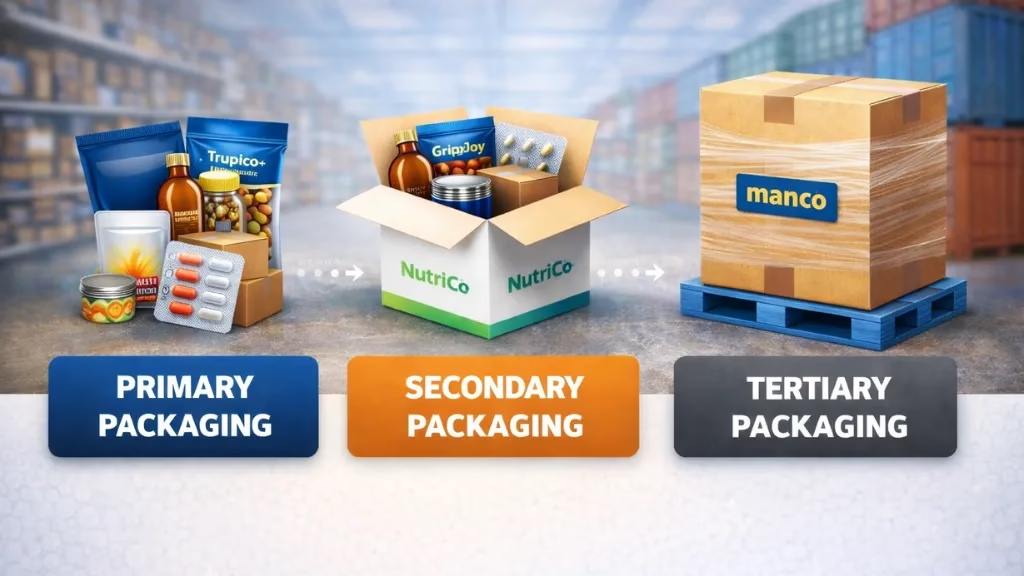
One of the most widely accepted ways to understand packaging is by dividing it into primary, secondary, and tertiary packaging. These levels describe how close the packaging is to the product and what role it plays.
Primary Packaging
Primary packaging is the first and most important layer of packaging because it comes into direct contact with the product. Its main purpose is product containment and protection while ensuring usability for the consumer.
Key Functions of Primary Packaging
- Holds the product securely
- Protects against contamination and damage
- Preserves product quality and shelf life
- Provides basic product information
Common Examples of Primary Packaging
- Bottles for liquids such as beverages or cosmetics
- Cans for food products
- Cartons for dairy items
- Sachets and pouches for single-use products
Common Materials Used
- Plastic
- Glass
- Paperboard
- Metal
Primary packaging is often referred to as consumer packaging because it is the package the end user directly interacts with.
Secondary Packaging
Secondary packaging groups multiple units of primary packaging together. It does not touch the product itself but adds an extra layer of protection and supports branding, storage, and retail presentation.
Key Functions of Secondary Packaging
- Groups individual product units
- Enhances protection during handling and storage
- Improves retail display and organization
- Supports branding and labeling
Common Examples of Secondary Packaging
- Boxes containing multiple bottles
- Cartons holding packaged food items
- Shrink wrap around grouped products
- Trays used for retail packaging formats
Secondary packaging plays a major role in unit packaging examples seen on store shelves and during short-distance transportation.
Tertiary Packaging
Tertiary packaging is used for bulk handling, transportation, and logistics. It protects products during long-distance shipping and warehouse storage and is rarely seen by consumers.
Key Functions of Tertiary Packaging
- Enables safe transportation of large quantities
- Improves stackability and load stability
- Reduces damage during shipping
- Supports efficient handling and storage
Common Examples of Tertiary Packaging
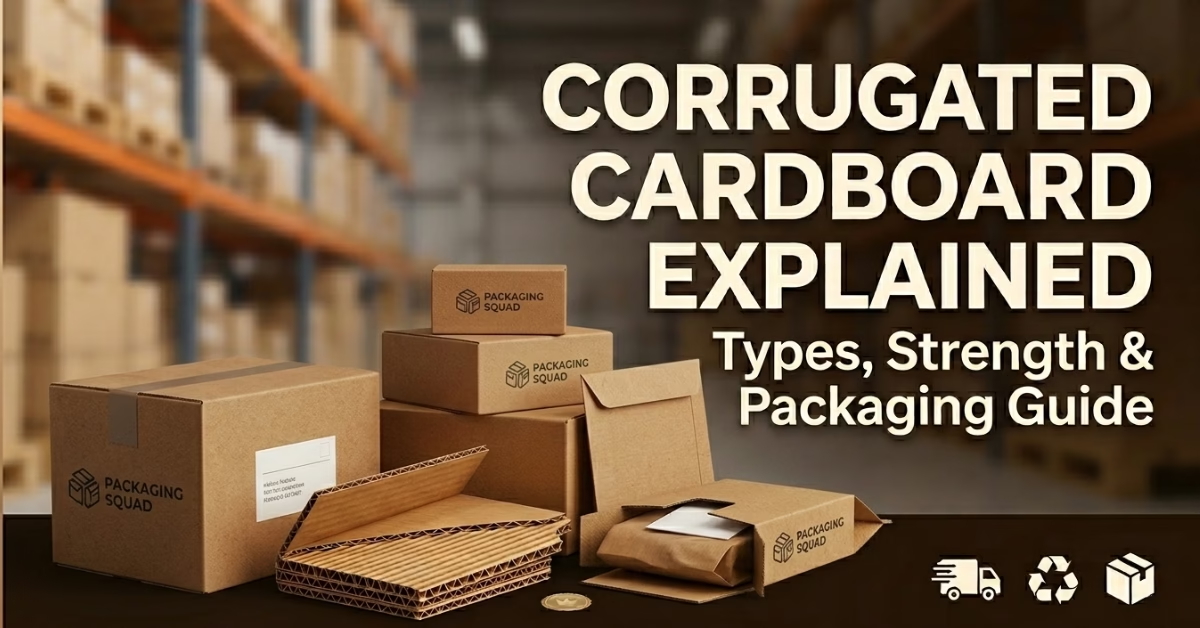
- Corrugated cartons
- Palletized loads
- Drums for bulk goods
- Large shipping containers
This level of packaging is essential for transport packaging types and plays a critical role in supply chain efficiency.
Rigid vs Flexible Packaging
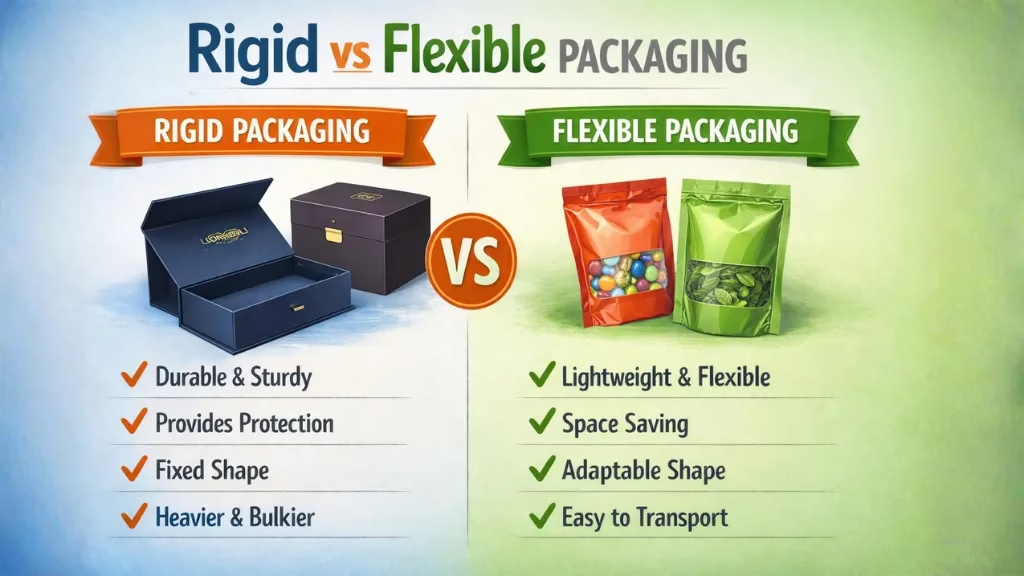
Packaging can also be classified based on its structure: rigid or flexible. Understanding this distinction helps businesses choose the right packaging type depending on product fragility, handling, and storage requirements.
Rigid Packaging
Rigid packaging refers to packaging that retains its shape and provides strong protection for the product inside. It is often used for items that require durability and resistance to physical stress during handling and shipping.
Key Features:
- Maintains shape and structure
- Provides strong protection against impact
- Ideal for fragile or valuable items
Common Examples:
- Glass bottles for beverages or cosmetics
- Metal cans for food and industrial products
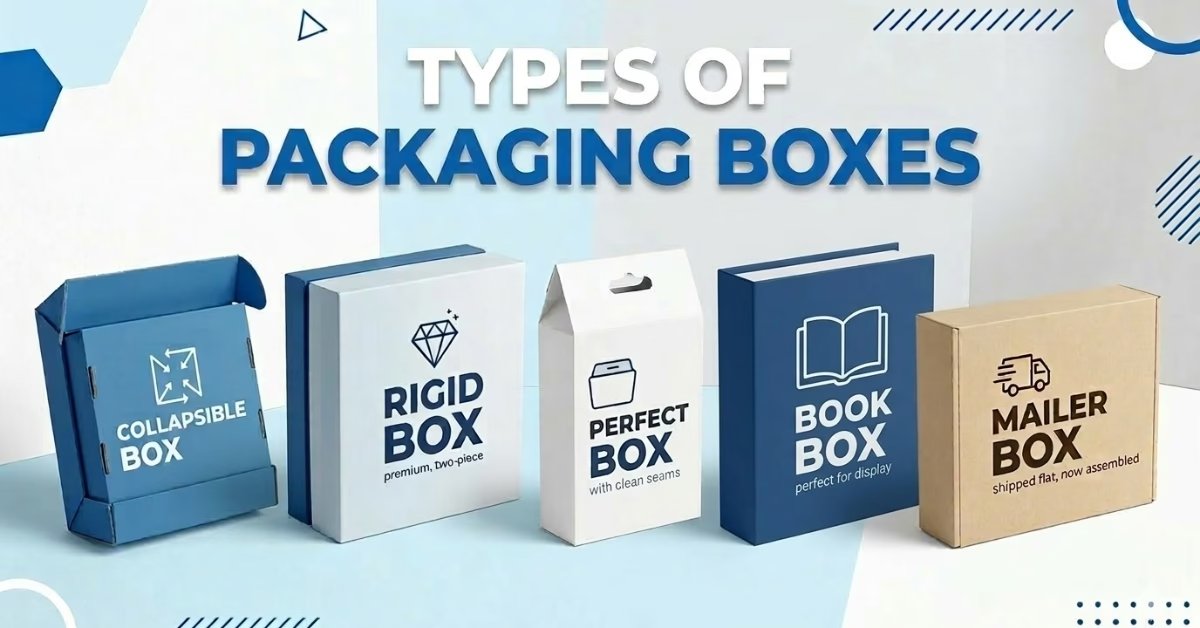
- Rigid boxes for electronics or gift items
Flexible Packaging
Flexible packaging is made from materials that can bend, fold, or stretch without breaking. It is lightweight, cost-effective, and widely used in food, pharmaceuticals, and retail packaging.
Key Features:
- Lightweight and space-efficient
- Easy to transport and store
- Often used for single-use or small-volume products
Common Examples:
- Pouches for snacks or liquids
- Films and wraps for food products
- Bags for dry goods
Comparison: Rigid vs Flexible Packaging
Understanding the differences between rigid and flexible packaging helps businesses select the most suitable option for their products. Here’s a clear comparison based on key factors:
| Feature | Rigid Packaging | Flexible Packaging |
| Shape | Maintains a fixed shape | Can bend, fold, or stretch |
| Durability | High durability; protects fragile items | Moderate durability; less impact-resistant |
| Weight | Heavier | Lightweight and space-saving |
| Cost | Typically more expensive | Cost-effective |
| Storage & Transport | Requires more space; stackable | Easier to transport; occupies less volume |
| Common Materials | Glass, metal, rigid plastic, cardboard | Plastic films, pouches, flexible paperboard |
| Typical Uses | Bottles, cans, rigid boxes, drums | Snack pouches, wraps, bags for dry goods, sachets |
| Sustainability | Recyclable materials; depends on type | Can be challenging to recycle; some biodegradable options available |
Key Takeaways:
- Rigid packaging is ideal for fragile, high-value, or perishable products, providing strong protective layers and maintaining barrier properties.
- Flexible packaging works best for lightweight, small-volume, or consumable items, offering convenience and efficient product containment.
- Many businesses use a combination of both: rigid for primary protection, flexible for secondary or tertiary packaging, depending on distribution and storage needs.
Packaging by Material
The choice of packaging material is crucial as it affects product protection, shelf life, cost, and sustainability. Different materials are used depending on the product type, handling requirements, and storage conditions. The most common packaging materials are plastic, paperboard, glass, and metal.
Plastic Packaging
Plastic packaging is one of the most widely used materials due to its lightweight, versatility, and cost-effectiveness. It can be molded into bottles, pouches, films, and containers of various sizes.
Key Features:
- Lightweight and durable
- Resistant to moisture and chemicals
- Flexible for different shapes and sizes
Common Uses:
- Bottles for beverages and cosmetics
- Pouches for snacks and liquids
- Shrink wraps and plastic film
Paperboard & Cardboard Packaging
Paperboard and cardboard are widely used for boxes, cartons, and corrugated packaging. They are rigid, recyclable, and ideal for shipping and retail display.
Key Features:
- Provides structural support
- Lightweight yet sturdy
- Easy to print for branding
Common Uses:
- Folding cartons for consumer goods
- Corrugated boxes for transport
- Cartons for food and beverages
Glass Packaging
Glass packaging is primarily used for products that need high barrier protection, durability, and premium presentation. It is non-reactive and preserves product quality for beverages, food, and cosmetics.
Key Features:
- Non-permeable and chemically stable
- Provides excellent barrier properties
- Heavier and fragile
Common Uses:
- Bottles for beverages and sauces
- Jars for jams, honey, and cosmetics
Metal Packaging
Metal packaging includes cans, drums, and tins and is valued for its strength, durability, and long-term storage capabilities. It is widely used in food, industrial, and chemical products.
Key Features:
- High durability and protection
- Resistant to impact and external elements
- Can be recyclable depending on type
Common Uses:
- Food cans for vegetables, fruits, and beverages
- Drums for bulk liquids and chemicals
- Tinplate boxes for premium products
Packaging Based on Function
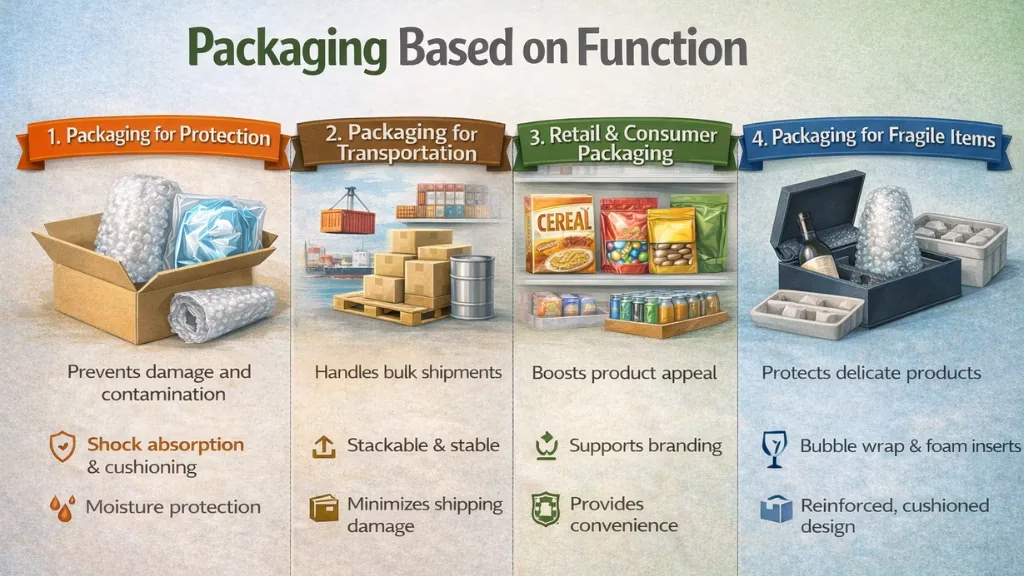
Packaging is not just about holding a product; it also serves specific functional purposes. Understanding these functions helps businesses choose the right type of packaging for protection, transportation, retail display, and fragile items.
1. Packaging for Protection
Protective packaging ensures that products remain safe from damage, contamination, or spoilage during handling, storage, and transportation. This is especially important for fragile items, perishable goods, and liquids.
Key Features:
- Shock absorption and cushioning
- Moisture and environmental protection
- Tamper resistance
Common Examples:
- Bubble wrap for fragile items
- Foam inserts in boxes
- Sealed pouches for moisture-sensitive products
2. Packaging for Transportation
Transport packaging focuses on the safe handling, storage, and shipping of products in bulk. It is essential for maintaining product integrity from the warehouse to the retailer.
Key Features:
- Stackability and load stability
- Efficient handling and storage
- Minimizes damage during shipping
Common Examples:
- Corrugated cartons for bulk goods
- Palletized packaging
- Drums and shipping containers
3. Retail & Consumer Packaging
Retail packaging is designed to attract consumers, provide convenience, and display the product effectively on store shelves. It often combines primary and secondary packaging.
Key Features:
- Enhances product visibility
- Supports branding and labeling
- Provides easy access and usability
Common Examples:
- Folding cartons with printed designs
- Trays and shrink-wrapped product sets
- Pouches with resealable features
4. Packaging for Fragile Items
Fragile items require special packaging solutions to prevent breakage during handling and transportation. This includes using cushioning materials, protective layers, and shock-absorbent designs.
Common Techniques:
- Bubble wrap, foam inserts, and molded trays
- Rigid boxes with inner partitions
- Layered packaging for extra protection
Key Takeaways:
- Each function of packaging—protection, transportation, retail, and fragile item handling—serves a unique purpose in the product lifecycle.
- Choosing the right functional packaging enhances product safety, consumer satisfaction, and operational efficiency.
- Functional packaging decisions often intersect with material choice, structure, and packaging level, creating a complete and optimized packaging system.
Common Examples of Packaging Types & Use Cases
Understanding the different types of packaging is easier when we look at real-world examples across industries. These examples illustrate how packaging protects, displays, and transports products while supporting branding and sustainability.
1. Food Packaging Types
Food products require packaging that ensures freshness, hygiene, and protection. Different materials and packaging levels are used depending on the product.
Examples:
- Primary Packaging: Pouches for snacks, cans for vegetables, glass bottles for sauces
- Secondary Packaging: Cardboard cartons containing multiple cans or bottles
- Tertiary Packaging: Corrugated boxes for bulk transportation
Key Considerations:
- Shelf life and barrier properties
- Compliance with food safety regulations
- Packaging for liquids, dry goods, or perishable items
2. Pharmaceutical Packaging
Pharmaceutical products require precise, protective, and tamper-evident packaging to ensure safety and compliance.
Examples:
- Primary Packaging: Blister packs, bottles for pills, vials for liquids
- Secondary Packaging: Folding cartons with dosage instructions
- Tertiary Packaging: Pallets and cartons for bulk distribution
Key Considerations:
- Tamper resistance
- Regulatory compliance
- Moisture and contamination protection
3. Industrial & Bulk Packaging
Industrial and bulk products need strong, durable packaging for safe transportation and storage.
Examples:
- Drums for chemicals
- Palletized corrugated boxes
- Metal containers for heavy machinery parts
Key Considerations:
- Stackability and durability
- Handling and transport efficiency
- Compliance with industrial safety standards
4. Fragile Item Packaging
Fragile items such as electronics, glassware, or ceramics require specialized packaging solutions to prevent damage.
Examples:
- Foam inserts and molded trays
- Bubble wrap inside rigid boxes
- Layered packaging for additional protection
Key Considerations:
- Shock absorption and cushioning
- Product containment and durability
- Protective packaging that meets handling requirements
Key Takeaways:
- Packaging choices vary widely depending on the industry, product type, and distribution requirements.
- Using the right combination of primary, secondary, and tertiary packaging ensures protection, brand identity, and operational efficiency.
- Including real-world examples not only improves readability and authority but also signals expertise to Google.
Choosing the Right Type of Packaging
Selecting the right type of packaging is crucial for product protection, shelf appeal, cost-efficiency, and sustainability. The choice depends on factors such as product type, fragility, distribution, storage, and consumer convenience.
1. Consider the Product Characteristics
Different products require different packaging solutions:
- Fragile Items: Use rigid packaging with cushioning layers like foam or bubble wrap.
- Liquids: Choose bottles, pouches, or cans that prevent leaks and preserve quality.
- Dry Goods: Flexible packaging or cartons can be efficient and cost-effective.
- Perishable Products: Packaging must maintain barrier properties to preserve freshness.
2. Select the Appropriate Packaging Level
Choosing the right combination of primary, secondary, and tertiary packaging ensures that the product is protected, handled efficiently, and displayed attractively:
- Primary Packaging: Direct contact with the product; ensures safety and usability.
- Secondary Packaging: Groups multiple units for storage and retail display.
- Tertiary Packaging: Supports bulk transport and warehouse handling.
3. Choose the Right Material
Material selection affects durability, cost, sustainability, and protection:
- Plastic: Flexible, lightweight, ideal for liquids and snacks.
- Paperboard & Cardboard: Rigid, recyclable, great for shipping and retail display.
- Glass: Non-reactive, durable, premium presentation.
- Metal: Strong, durable, suitable for industrial and bulk products.
4. Consider Functional Requirements
- Protection: Cushioning, shock absorption, moisture resistance.
- Transportation: Stackability, load stability, easy handling.
- Retail Display: Branding, labeling, consumer convenience.
- Fragile Items: Extra protective layers and reinforced packaging.
5. Sustainability and Regulatory Compliance
- Use recycled or biodegradable materials where possible.
- Ensure compliance with industry standards and food safety regulations.
- Sustainable choices improve brand reputation and consumer trust.
Key Takeaways:
- Choosing the right packaging involves balancing product needs, material properties, functional requirements, and sustainability.
- A well-chosen packaging type reduces damage, improves consumer satisfaction, and strengthens brand identity.
- Integrating primary, secondary, and tertiary layers ensures optimal protection, storage, and transport efficiency.
Sustainable & Eco-Friendly Packaging Types
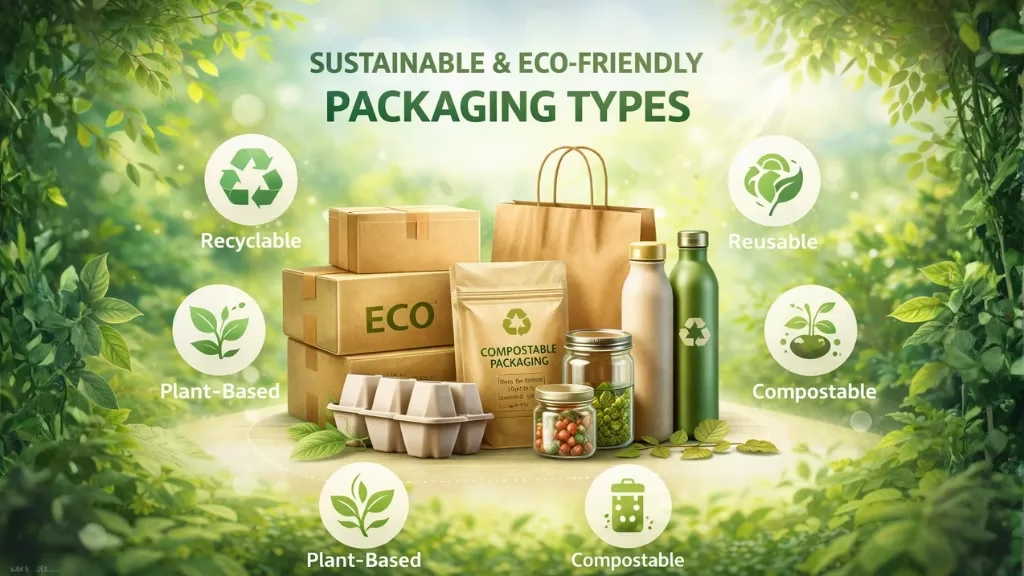
Sustainability in packaging is no longer optional—it is a critical factor for brands, consumers, and regulatory compliance. Eco-friendly packaging reduces environmental impact, supports recycling initiatives, and appeals to environmentally conscious customers.
1. Recycled Materials
Using post-consumer recycled materials is a common way to make packaging more sustainable. Paper, cardboard, and certain plastics can be recycled and reused for new packaging products.
Benefits:
- Reduces waste in landfills
- Lowers carbon footprint
- Supports circular economy initiatives
Common Uses:
- Cardboard boxes for shipping
- Paperboard cartons for consumer products
- Recycled plastic pouches and bottles
2. Biodegradable & Compostable Packaging
Biodegradable or compostable materials break down naturally without harming the environment. These materials are particularly used in food packaging and single-use products.
Benefits:
- Environmentally friendly disposal
- Reduces long-term pollution
- Meets consumer demand for sustainable products
Common Uses:
- Compostable food containers and trays
- Biodegradable bags for dry goods
- Plant-based pouches and wraps
3. Minimalist & Reduced Packaging
Minimizing packaging material reduces waste and costs. Brands can optimize packaging design to use less material without compromising protection.
Benefits:
- Cost-efficient and eco-conscious
- Reduces transportation weight and carbon emissions
- Enhances brand image as environmentally responsible
Common Uses:
- Smaller, optimized cartons
- Flexible pouches instead of bulky boxes
- Eliminating unnecessary layers in secondary and tertiary packaging
4. Key Considerations for Sustainable Packaging
- Ensure product protection and shelf life is not compromised
- Check compatibility with existing recycling systems in different countries
- Consider consumer convenience and usability
Key Takeaways:
- Sustainable packaging is a win-win: it protects products while reducing environmental impact.
- Using recycled, biodegradable, or minimalist materials helps brands improve consumer trust and E-E-A-T signals.
- Integrating sustainability into packaging decisions also aligns with regulatory requirements in many industries.
Frequently Asked Questions (FAQs)
Q1: What is the most common type of packaging?
A: The most common packaging types vary by industry, but primary packaging such as bottles, cans, cartons, and pouches is used in almost every sector.
Q2: What’s the difference between primary, secondary, and tertiary packaging?
A:
- Primary packaging comes into direct contact with the product.
- Secondary packaging groups multiple units for storage or retail display.
- Tertiary packaging protects products during bulk transportation and logistics.
Q3: Which packaging type is best for fragile items?
A: Rigid packaging combined with protective layers such as foam inserts, bubble wrap, and molded trays is ideal for fragile items.
Q4: What are eco-friendly packaging options?
A: Eco-friendly options include recycled materials, biodegradable packaging, compostable containers, and minimalist packaging designs that reduce waste and environmental impact.
Q5: How do I choose the right packaging for my product?
A: Consider the product’s fragility, material, transportation needs, retail presentation, and sustainability goals. Select the appropriate combination of primary, secondary, and tertiary packaging for optimal protection and usability.