










Description
A Display Is a Sales Tool With Rules Attached
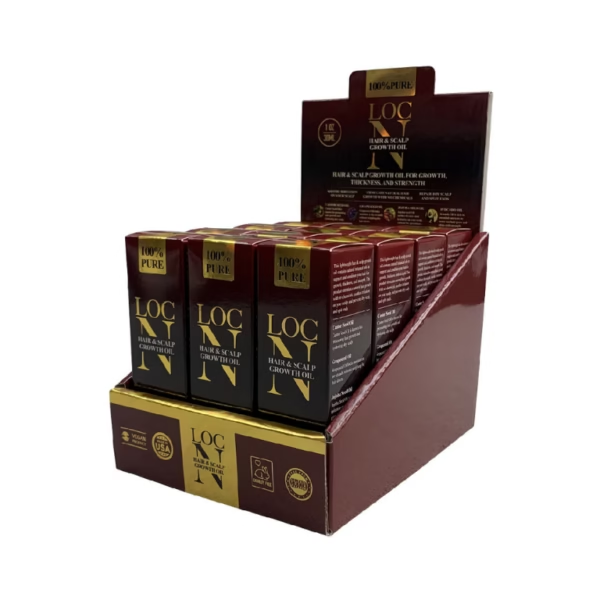
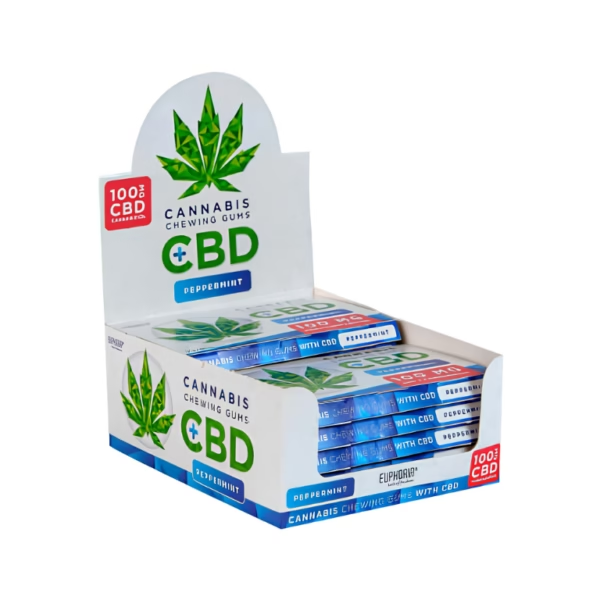
Most retail displays just need to look good and hold product. This one also needs to respect where it’s legally allowed to sit in a store.
That changes the brief. A display built only for looks might not meet a state’s placement or visibility requirements, which means a genuinely well-designed display can still get pulled from the floor if it wasn’t planned with compliance in mind.
Three Display Types, and When Each Makes Sense
| Type | Best For | Watch Out For |
|---|---|---|
| Countertop | Tinctures, small edibles, low unit count | Limited space, needs to stay near register |
| Floor-Standing | Larger flower or multi-product lines | Needs a compliant location, not just open floor |
| Locking Case | High-value vapes, concentrates, theft-prone items | Adds cost, but often required by insurance or store policy |
Countertop displays work well for lower-cost, smaller items like tinctures. Floor-standing units suit a wider product range but need more thought about where they’re legally allowed to go. Locking cases add real security for anything with high resale value or theft risk, which vape cartridges and concentrates often carry.
Weight Is the Detail Most Displays Get Wrong
CBD product lines mix weights more than most retail categories. A glass tincture bottle, a box of gummies, and a vape cartridge all sit differently in a display, and a structure built for one doesn’t automatically hold the others safely.
Board weight and flute type need to match your heaviest item, not your average one. A display that sags under a full restock isn’t just unattractive, it’s a liability if something falls.
Compliance Signage Isn’t an Afterthought
A lot of states require visible age-restriction signage at the point of display, not just at the register. Building space for that signage into the display itself, rather than taping a sign on after the fact, looks more intentional and holds up better over time.
This is worth planning with your specific state’s rules in mind, since requirements differ enough that a one-size design doesn’t always transfer cleanly between markets.
Does the Display Still Need to Sell the Brand?
Yes, and this is where a lot of CBD brands underinvest. A cluttered, generic display makes even a well-branded product look like an afterthought.
Consistent branding across a display and the products inside it, from a tincture line to pre rolls to dab wax jars, reads as one connected brand rather than a shelf of unrelated products. That consistency is often what gets a display a better spot in the store.
Materials
E-flute corrugated suits smaller countertop displays. B-flute or double-wall board holds up better for floor-standing units carrying more weight or a wider product mix. Locking cases typically pair corrugated or acrylic paneling with a physical lock mechanism.
Let’s Plan This Together
Tell us your product mix, your typical unit count, and the states you’re placing displays in. We’ll help plan the structure, the signage space, and the security level together, and you’ll see a dieline before anything ships. If you’re also selling vape cartridges or hemp flower, we’ll keep your whole retail presence connected.
Who Buys These
Dispensaries organizing a multi-product counter. Smoke shops and vape shops displaying a mixed CBD and nicotine lineup. Distributors supplying retail chains with branded display units. Anyone launching a new Delta 8 or marijuana product line that needs a strong retail introduction.












Reviews
There are no reviews yet.